
ENVIRONMENT & SUSTAINABILITY · 2026

Eco-Barrier IoT: Cleaning Small Rivers.

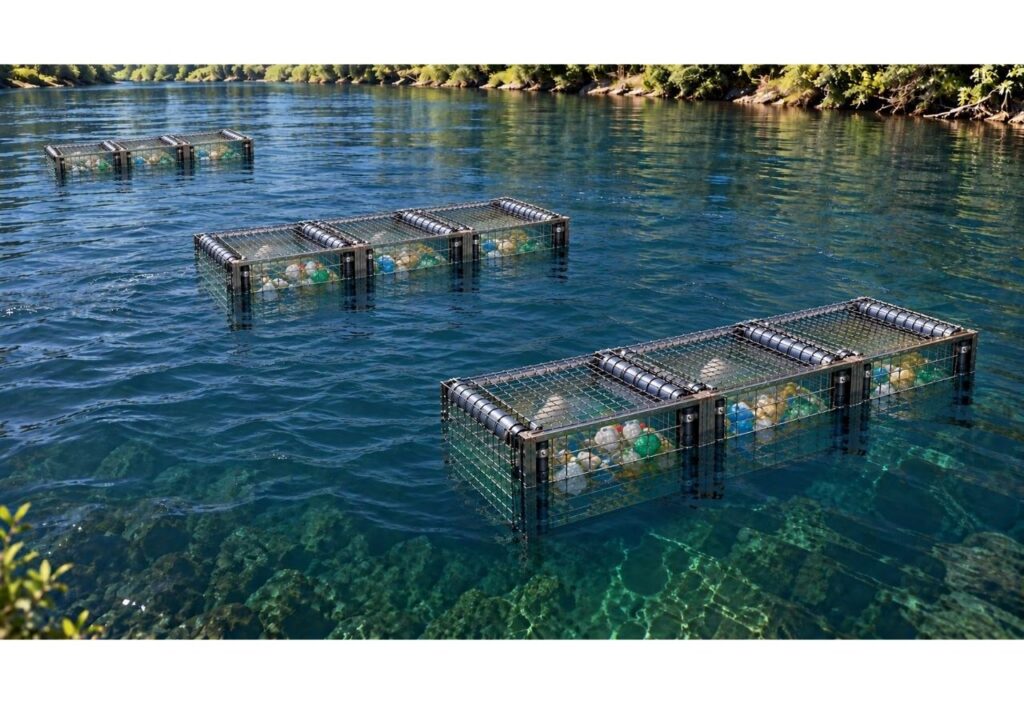
Eco-Barrier IoT is a reliable, easily assembled, autonomous modular complex equipped with "smart" monitoring, designed to clean small rivers of Ukraine from debris

0
The problem

Why Дмитро Кудрявцев created the Eco-Barrier IoT: Cleaning Small Rivers.

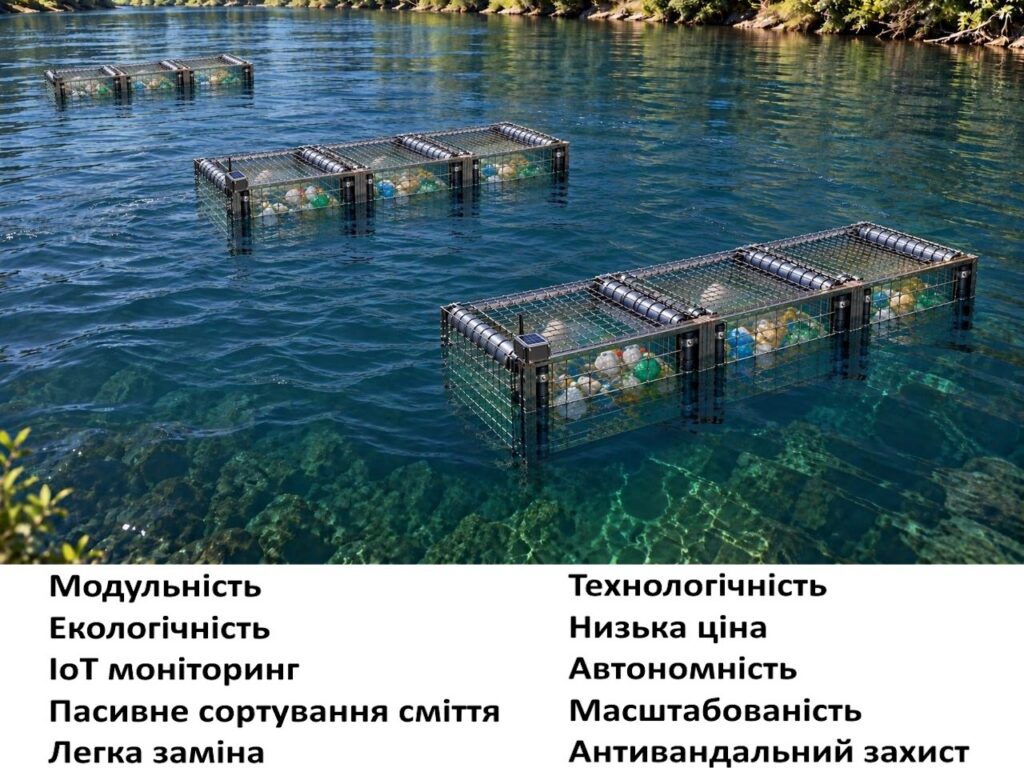
Eco-Barrier IoT is an inexpensive, easy-to-assemble, reliable, passive, autonomous modular complex equipped with “smart” monitoring, designed for small rivers of Ukraine, and completely safe for river ecology. Problem: Pollution of rivers with solid household waste (SHW), plastic pollution and macro-litter is today one of the greatest environmental catastrophes. Plastic accounts for more than 80% of all waste in water bodies, and due to its durability the problem only keeps accumulating. This leads to the destruction of ecosystems, threatens human health, and causes a shortage of drinking water. Pollution of Ukraine's rivers with floating waste is a systemic problem that is not solved by any of the existing practices. Every year, tens of thousands of tons of plastic, polyethylene, packaging and other household waste enter the country's water bodies. It accumulates at river mouths, in bays, and ends up in large water bodies and seas. For most small rivers of Ukraine, there is no cheap and effective solution that would systematically intercept floating waste before it reaches large water bodies. Existing approaches have many drawbacks. Solution: I have developed a fully autonomous modular complex that uses the river's kinetic energy for cleaning, with “smart” monitoring that remotely notifies devices about the need for maintenance via an IoT protocol. Advantages:
  • Modularity
  • Eco-friendliness
  • IoT monitoring
  • Passive waste sorting
  • Easy replacement
  • Technological sophistication
  • Low
The invention

How the Eco-Barrier IoT: Cleaning Small Rivers works.

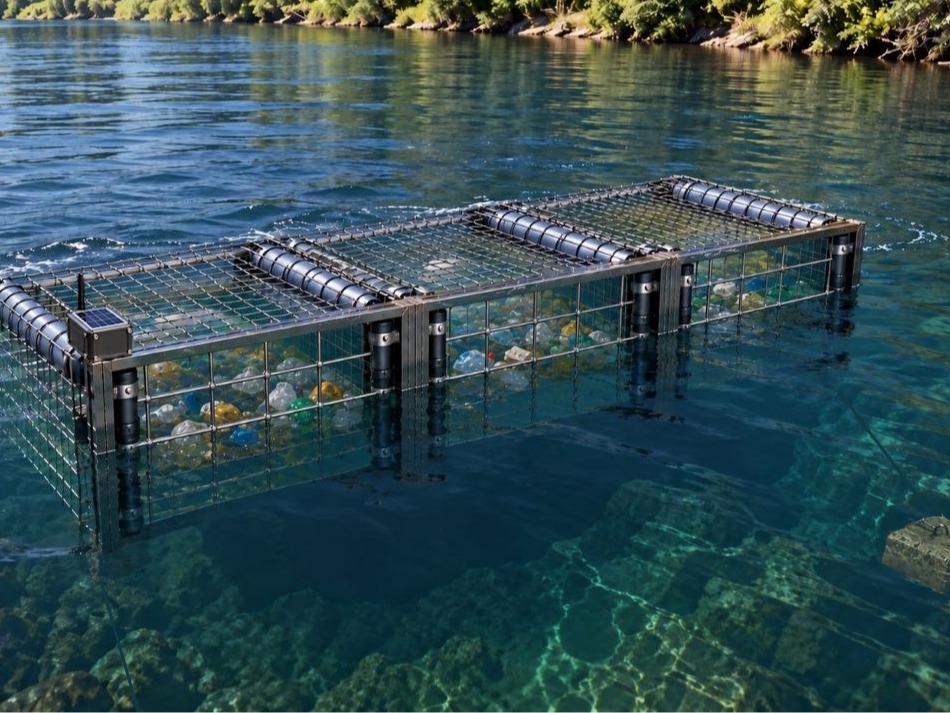
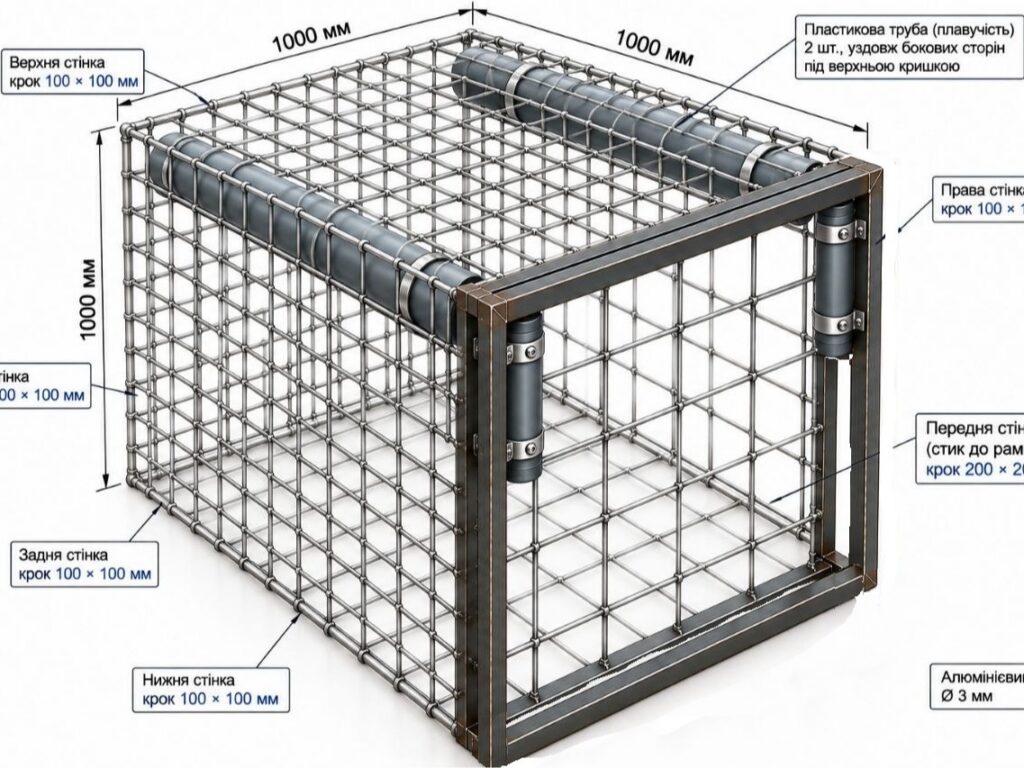
Waste floating down the river enters the first row of trash-collecting baskets. The row is a line of sections on a frame, positioned at an angle to the current and anchored on both sides.
  • If an item is too large for the basket, due to the angle of placement it slides and deflects to the side, floating past freely.
  • If an item is smaller than the grid spacing, it falls into the basket and rests against the outlet grid, which has a smaller spacing. Water and smaller items pass freely through the grid, while the item remains in the basket.
  • The next row, located downstream, has a smaller inlet and outlet grid size, and the following one is even smaller.
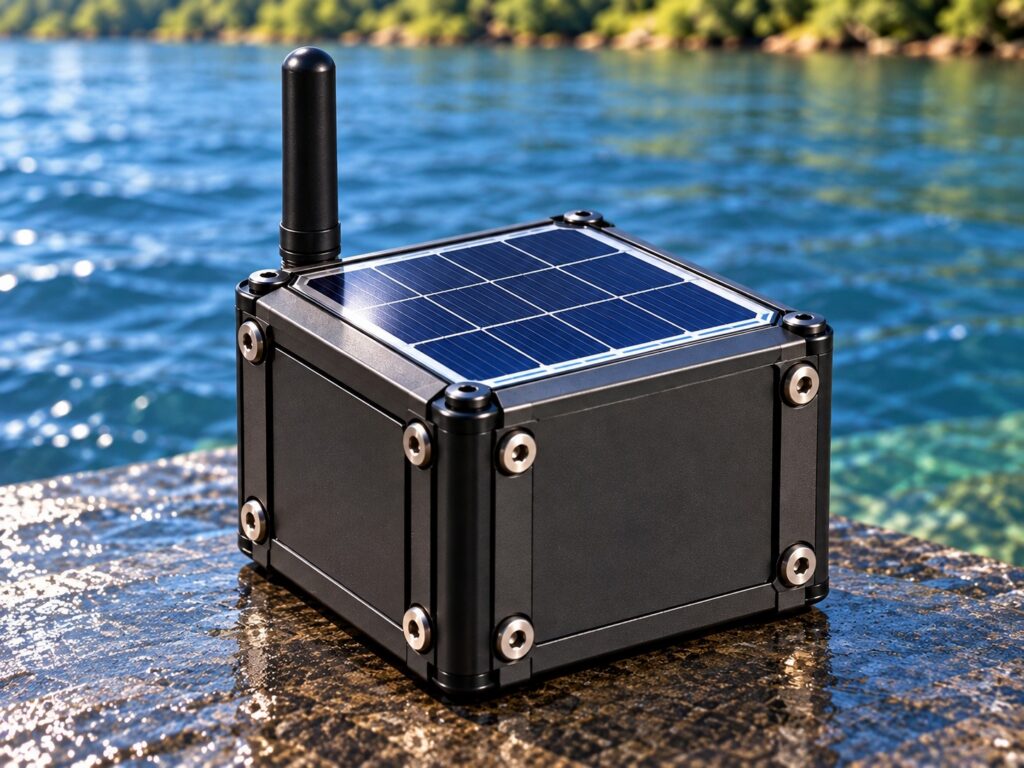
This way, waste is automatically sorted by size.Concrete blocks are used as anchors. The system is equipped with an autonomous IoT module with a solar panel or turbine, a battery, fill sensors for individual baskets, a controller and a GSM transmitter. An anti-vandal GPS module is available as an option. One or more sensors are lowered below the water level, and after a set period of time, the operator receives information on their device about exactly which section or row needs to be cleaned. Municipal services or volunteers arrive on-site and replace the container using a manipulator, a crane, or tow it ashore following a boat. The modular system with pontoons allows baskets to be replaced without having to transport the entire system, and also ensures compliance with safety regulations, without the risk of losing a
Community

0 comments.

Sign in to join the conversation.

Are you a student inventor?

If you have an idea to solve a real problem in your community, we want to hear from you.