
ENVIRONMENT & SUSTAINABILITY · 2026

MycoFlow - from mycelium to clean water.

A modular biofilter based on Pleurotus ostreatus mycelium and plant substrates for eco-friendly purification of surface water

0
The problem

Why Анастасія Моісєєва created the MycoFlow - from mycelium to clean water.

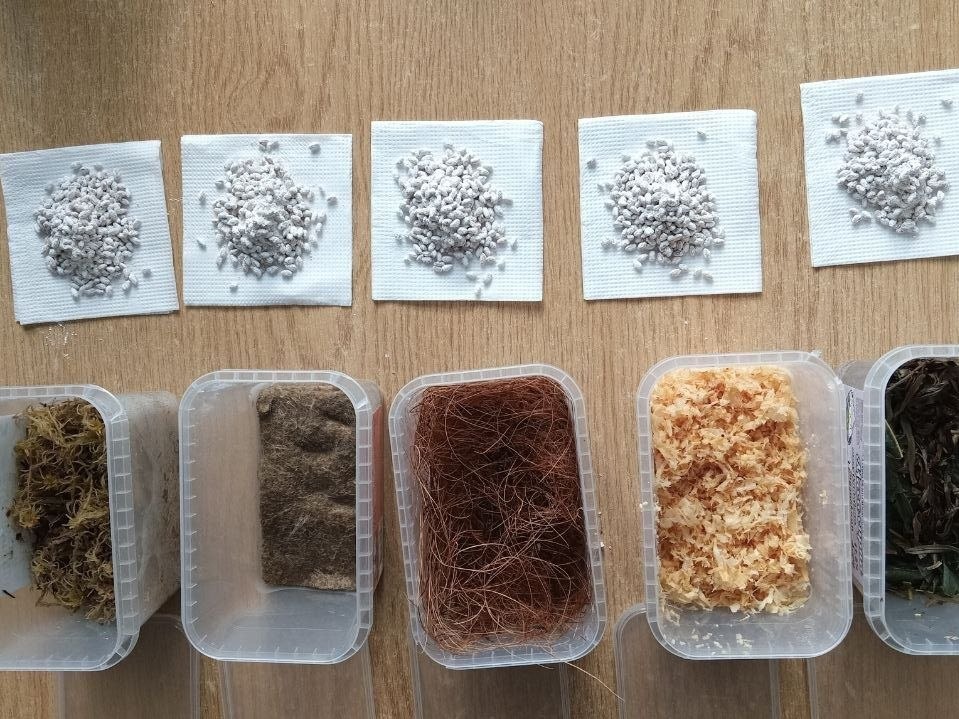
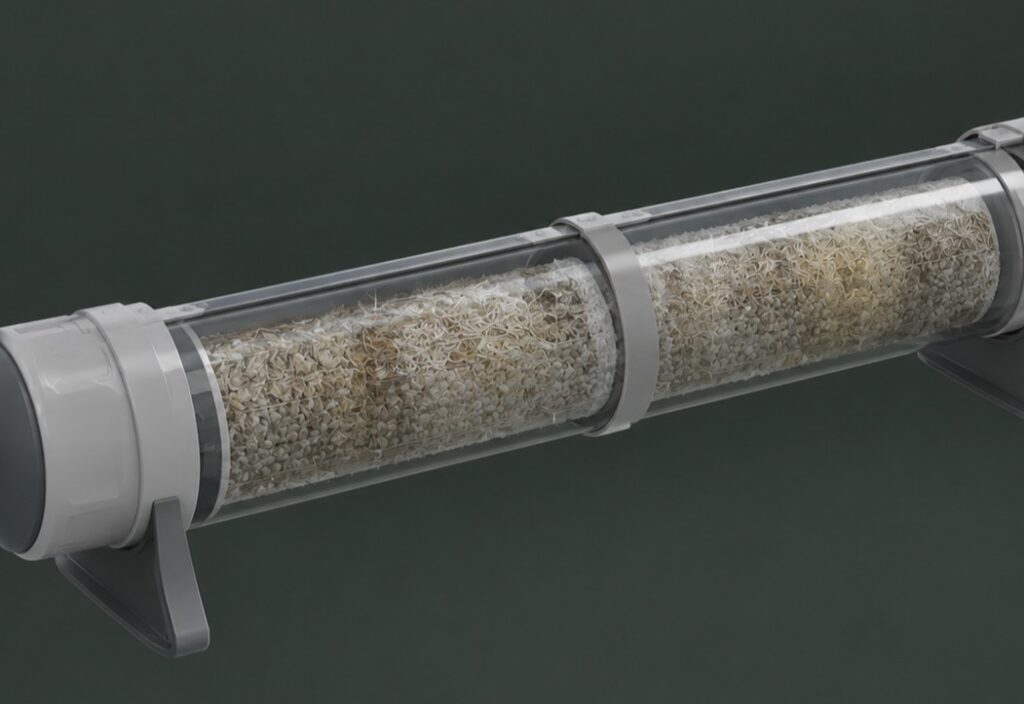
The idea of MycoFlow arose from the desire to find an environmentally friendly solution to the problem of surface water pollution. Traditional purification methods can require significant resources and the use of synthetic materials, so I decided to explore the potential of Pleurotus ostreatus mycelium - a natural material capable of forming porous structures based on plant substrates.The main concept of the invention is to create a modular biofiltration system in which mycelium is combined with accessible plant raw materials: sphagnum moss, wood sawdust, coconut fiber, linen cloth, and fallen leaves. The goal is to develop an effective, environmentally friendly, and potentially affordable way to purify surface water using biocomposites without synthetic binding agents.Key research findings: five types of mycelial biocomposites were obtained and their properties compared. The best results were demonstrated by compositions of mycelium with sphagnum and flax. The studied samples showed a reduction in nitrate content - down to 25 mg/l, phosphates - down to 0.5 mg/l, as well as lead and mercury - down to levels characteristic of control water. Based on the results, a modular cassette filtration system was designed.MycoFlow demonstrates the potential of combining biotechnology and environmental engineering to create more sustainable solutions in the field of water purification. The next step is to expand testing and verify the system's effectiveness in real-world conditions.

Nature doesn't just inspire innovation. It is innovation itself

— Анастасія Моісєєва
The invention

How the MycoFlow - from mycelium to clean water works.

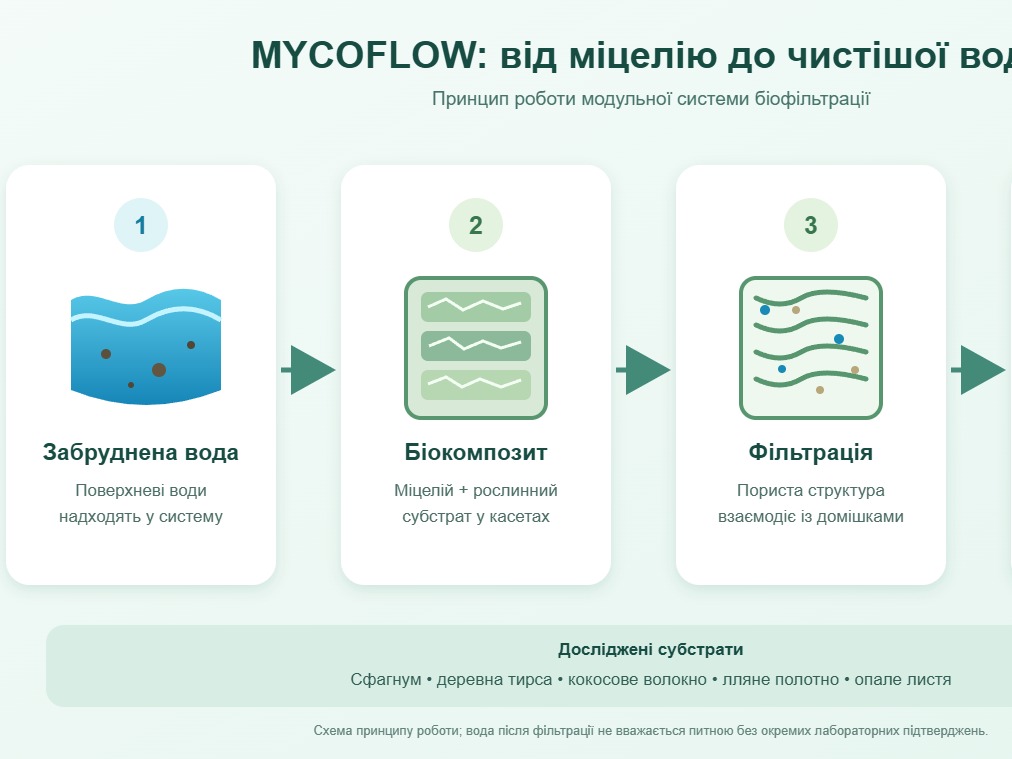
Principle of operation of the modular surface water biofiltration system based on mycelial biocomposites:1. Creating the biocomposite. Mycelium is grown on five types of substrates: sphagnum moss, wood sawdust, coconut fiber, linen cloth, and fallen leaves. During growth, fungal hyphae permeate the plant base, forming an integral porous structure without synthetic binding agents.2. Forming the filtration module. The resulting biocomposites are placed in separate cassettes that can be combined and replaced. This design makes it possible to study various combinations of materials and adapt the system to purification needs.3. The filtration process. As water passes through the biocomposite, its porous structure retains particles, and the surface of the material may promote the sorption of certain pollutants. Possible mechanisms of interaction with dissolved substances require further experimental confirmation.4. Monitoring results. Water indicators before and after filtration are compared in terms of nitrate, phosphate, and heavy metal content. This makes it possible to assess the effectiveness of different biocomposites and identify the most promising materials.Study results. The best results among the tested compositions were shown by mycelium combined with sphagnum moss and flax. In the studied samples, a reduction in nitrate and phosphate content, as well as lead and mercury, was recorded. MycoFlow combines natural materials, a modular design, and an experimental approach

Community

0 comments.

Sign in to join the conversation.

Are you a student inventor?

If you have an idea to solve a real problem in your community, we want to hear from you.