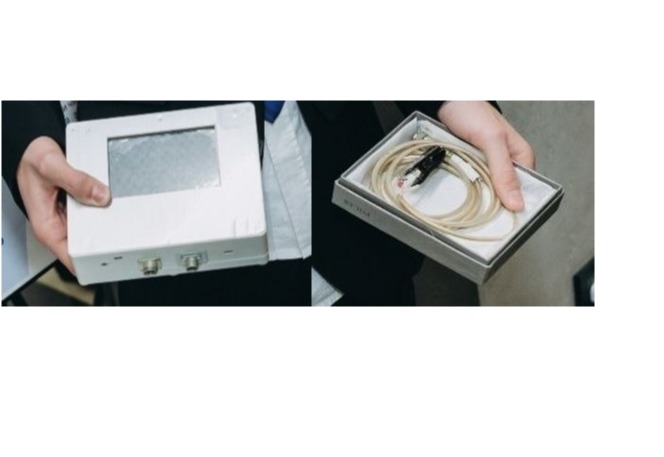

Device for early diagnosis of blood clots.
Development and implementation of a non-invasive device for early diagnosis of blood clot formation in the body. Will save 1,600,000 people worldwide EVERY YEAR. Portable, cheap, effective.
 Grade 10
 Kyiv
Why Олександр Слободянюк created the Device for early diagnosis of blood clots.
1.6 million people die from thrombosis worldwide every year. The problem isn't really the treatment itself, but early diagnosis — catching a blood clot just as it starts to form or right after it forms. To put it simply: if a person takes an anticoagulant or an antiplatelet agent (for example, aspirin), there won't be a problem at all! With that in mind, I decided to tackle this issue. From the very beginning, I was motivated by the fact that I could save so many lives simply by alerting people through my device — which is exactly why I want to make it as accessible and low-cost as possible.
1.6 million deaths worldwide every year. Let's save lives.
— Олександр СлободянюкHow the Device for early diagnosis of blood clots works.
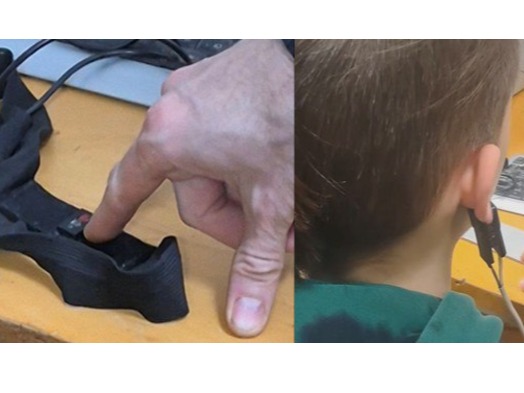
Development and implementation of a non-invasive device for early diagnosis of blood clot formation in the body. The basis of thrombus formation lies in increased blood density and decreased blood flow speed. A simultaneous deviation of both indicators from the norm signals a real risk of a blood clot. My gadget works on the principle of photoplethysmography: a light emitter passes rays through the body, and a receiver captures the absorbed light to calculate the amount of hemoglobin. We used two measurement methods: transmission (on the earlobe) and reflection (on the finger), confirming their reliability in practice. The device uses three types of wavelengths: red, infrared, and green — for oxy-, deoxy-, and carboxyhemoglobin. The main goal is to determine total hemoglobin in quantitative terms rather than as a proportion. By comparing light absorption at different wavelengths, I use a formula to calculate the total amount of hemoglobin, and from it — hematocrit and red blood cells, which indicate blood density. To measure blood flow speed without ultrasound, specialists, or a clinical setting, I measure the pulse wave velocity through its correlation with blood flow speed. I also used machine learning (Claude) to automatically convert the residual light into quantitative indicators.

Are you a student inventor?
If you have an idea to solve a real problem in your community, we want to hear from you.

0 comments.
Sign in to join the conversation.