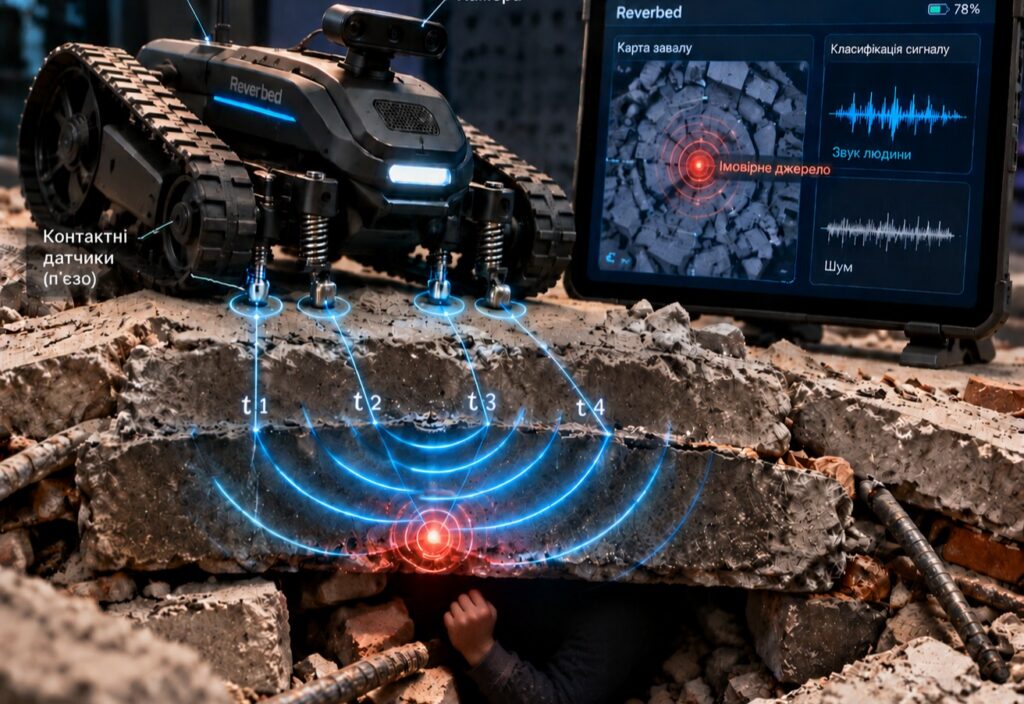

Reverbed.
A robot drives onto the rubble, stops, and uses contact sensors to pick up human sounds. AI distinguishes them from noise, and by the time difference, it locates the source for the rescuer.
 Grade 10
 Kyiv
Why Абрамова Анна Артемівна created the Reverbed.
Imagine: heavy concrete slabs are pressing down on you. It's dark. Cramped. Breathing is hard. Above, machinery is rumbling, people are walking, and you can hear all of it. You knock, call for help, believe you'll be found soon. But no one hears you. Concrete muffles sound — it barely escapes through it.Unfortunately, in Ukraine this is an everyday reality. Because of the war, there are more and more ruins in every city, and it's becoming harder and harder for rescuers and volunteers to search for people. However, this problem isn't relevant only to us. Earthquakes, building collapses, gas explosions, and fires happen everywhere. Searches can last for days, even weeks, and every hour can cost someone their life. A missed knock means a person will remain under the slab, even though help was literally a few meters away.At first I saw this on the news. Then an acquaintance of mine died under the rubble. Seeing a photo of her building, I decided to urgently create something that could help. That's how the idea of Reverbed was born.But my goal is for such a robot to be available not only to the State Emergency Service and other professional agencies, but also for small teams and volunteers to be able to afford such technology. A person trapped under rubble shouldn't have to depend on what equipment the rescuers have. All they need is to be heard.
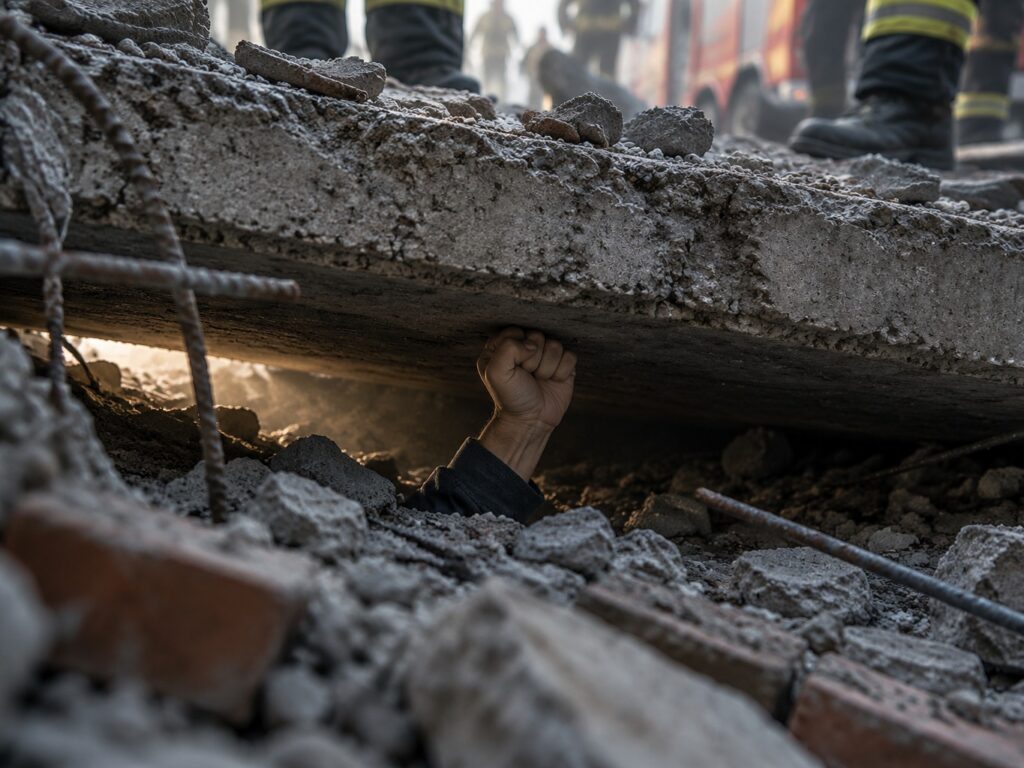
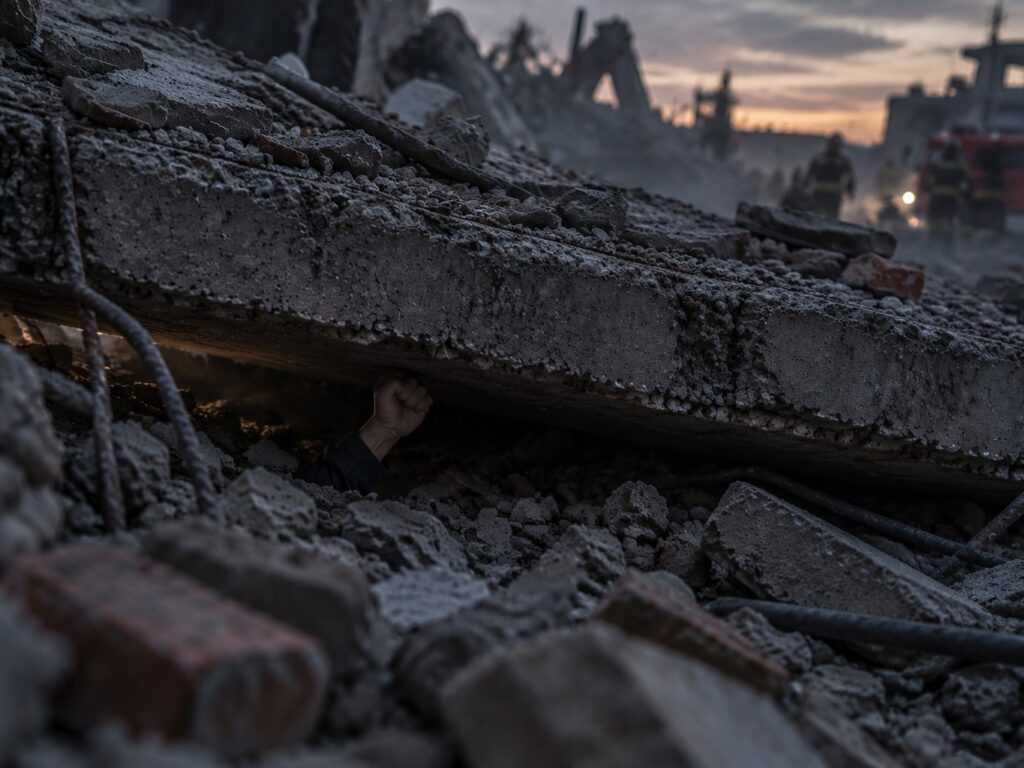
Silence on the surface doesn't mean no one is calling for help below
— Абрамова Анна АртемівнаHow the Reverbed works.
The robot moves slowly over the rubble on tracks. It also has a built-in camera that transmits images to the rescuer so they can see the path and obstacles ahead. The robot periodically stops on its own, and it can also be stopped by the rescuer by sending a command from a tablet. The motors turn off, because their noise could drown out a person's voice.Four sensors press against the concrete slab. They can pick up barely noticeable vibrations coming from the voice, moan, or knocking of a person under the rubble. Unlike a regular microphone, these sensors listen not to the air, but to the concrete itself.Recording happens from all sensors simultaneously. Then the system compares the recordings with each other, filtering out extraneous noise. Next, artificial intelligence is used: it looks for signs of human sounds, for example, a series of knocks with pauses between them.The robot determines the source of the sound by comparing when the wave reached each sensor. It arrives at the nearer sensor slightly earlier than at the farther one. Before searching, a test knock is made at a known location to find out how sound propagates through the slab. Then several measurements from different points help narrow down the search.Next, the rescuer will see a map on the screen. It marks where the source of the sound is most likely located.In the future, this system could be adapted for a drone. It could briefly land on unstable slabs, in places the robot can't reach.
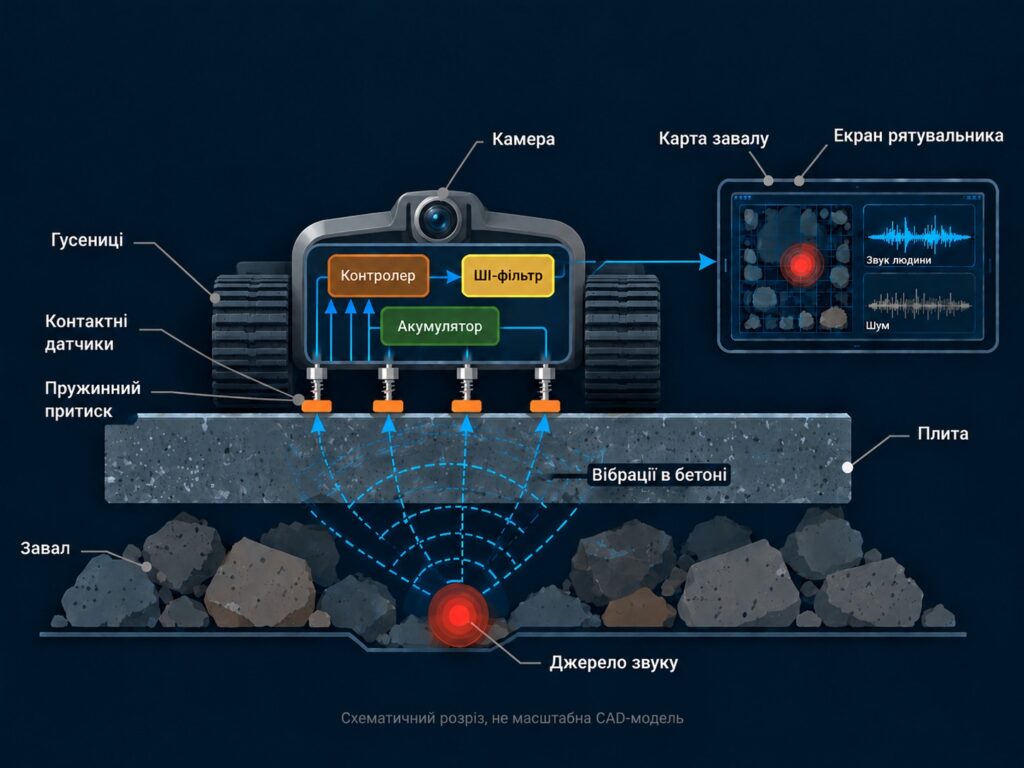
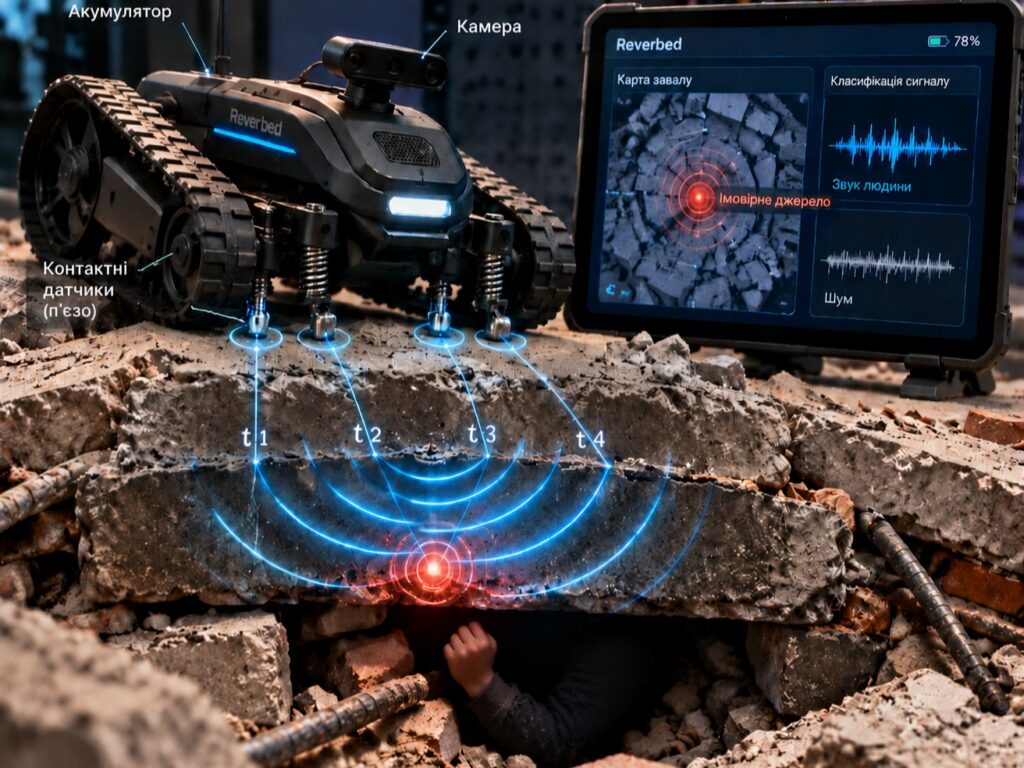
Through concrete, Reverbed hears people and filters out extraneous noise, helping rescuers find them faster
— Абрамова Анна Артемівна
Are you a student inventor?
If you have an idea to solve a real problem in your community, we want to hear from you.

0 comments.
Sign in to join the conversation.