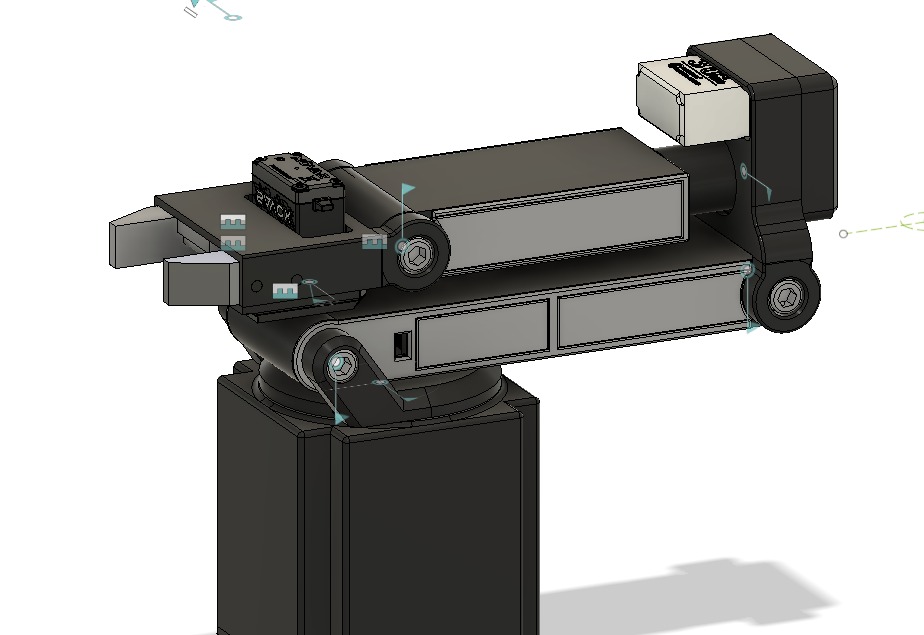

Chessbot.
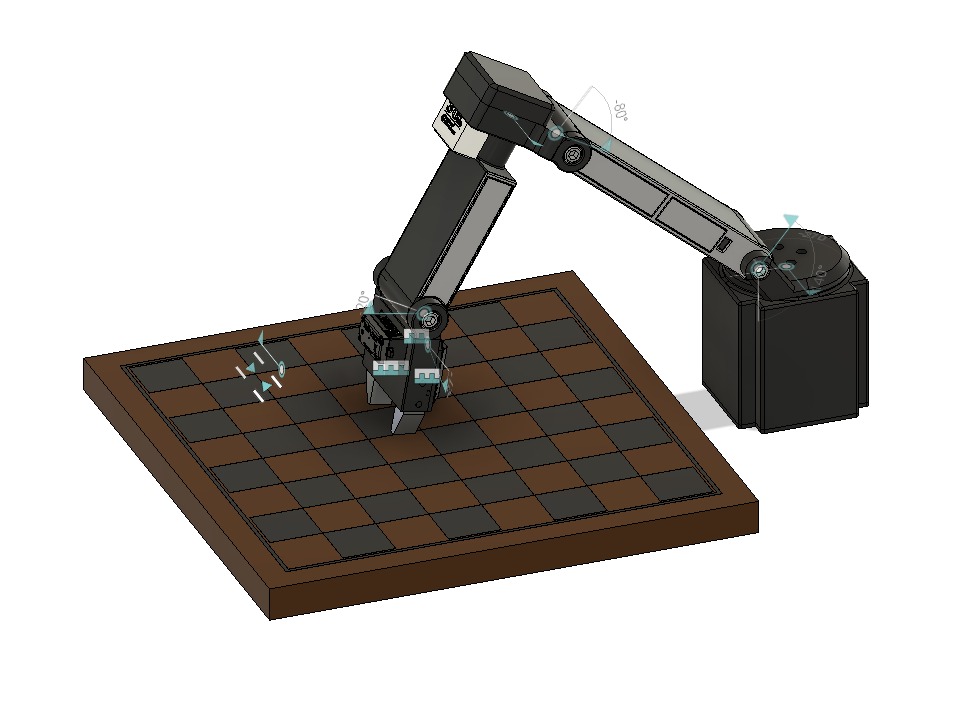
Chessbot - A five-axis robotic manipulator with computer vision, created for playing chess and interacting with the surrounding environment.
 Grade 10
 Lutsk, Volynska Oblast
Why Гірін Олександр created the Chessbot.
Chess Bot was originally created as a robotic system for playing chess. However, in the process of developing it, I saw an opportunity to expand its functionality and go beyond the original concept. This is how the idea arose to turn it into a multifunctional robotic assistant with artificial intelligence, capable of providing relevant information, answering questions, and interacting with humans using servo drives. The main goal of the project became exploring the possibilities of combining artificial intelligence with a physical robotic system. Unlike an ordinary software assistant, the robot has a mechanical component that enables physical interaction with the user. While working on it, I strive to combine knowledge of programming, electronics, mechanics, and control systems into a single project. In the future, I plan to expand the robot's capabilities, improve the ways it interacts with people, and explore new options for practical application. Thus, Chess Bot is not just an engineering project for me, but also an opportunity to develop a system that combines the intelligent capabilities of software with the physical capabilities of robotics.
How the Chessbot works.
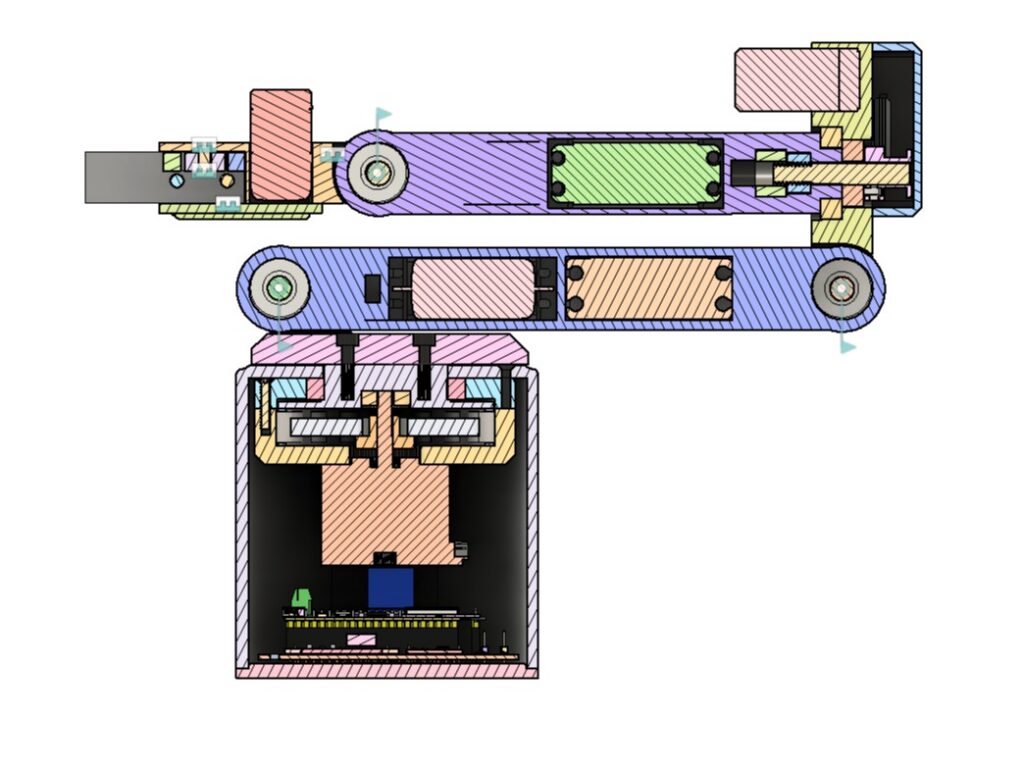
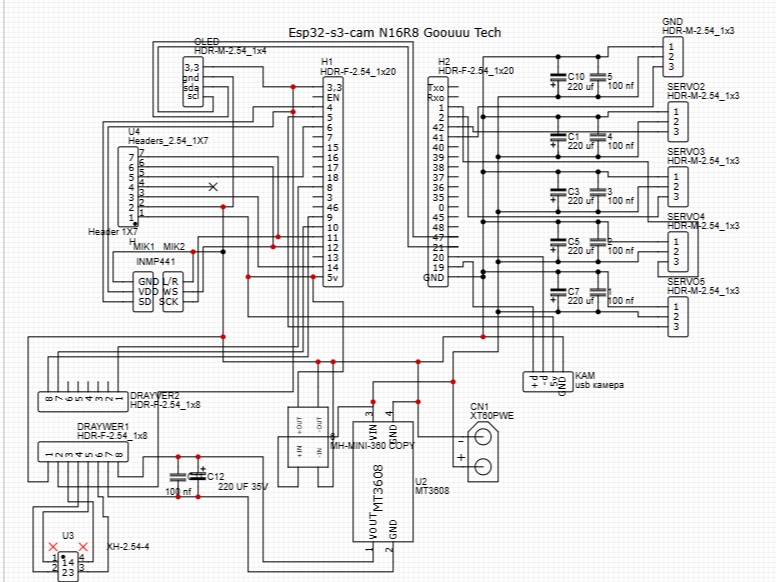
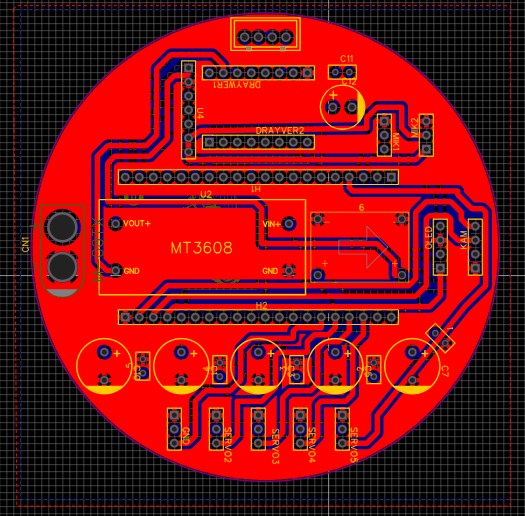
The work begins with receiving a video stream from a USB webcam connected to the microcontroller . The controller transmits the video data to a laptop, where the main computational part of the system is performed. The program compares images of the chessboard before and after a move, analyzes changes in cell occupancy, and determines the movement of pieces. For this, a predefined coordinate grid is used, in which each cell corresponds to certain coordinates. The choice of the chess move is handled by Stockfish - a chess engine that analyzes the position and evaluates possible continuations. After determining the move, a program written in C++ converts the cell coordinates into the manipulator's workspace coordinates and calculates the inverse kinematics. The resulting commands are sent to the ESP32-S3, which controls the actuators and ensures the execution of the required movements.The mechanical part consists of five servo motors and a NEMA 17 stepper motor. Rotation from the servo motors is transmitted using belt drives with pulleys and simple belt-tensioning mechanisms.The electronic system is built on the ESP32-S3 and includes a TMC2209 stepper motor driver, an INMP441 digital microphone, and a MAX98357A audio amplifier. These audio components are intended for implementing voice control and AI-powered voice responses. It is planned to add voice command recognition so that the user can interact with the robot in a more natural way.Currently, the Chess Bot is at the stage

Are you a student inventor?
If you have an idea to solve a real problem in your community, we want to hear from you.

0 comments.
Sign in to join the conversation.