Oleksii Kurtsev: How to Restore Ukrainian Children's Ability to Act

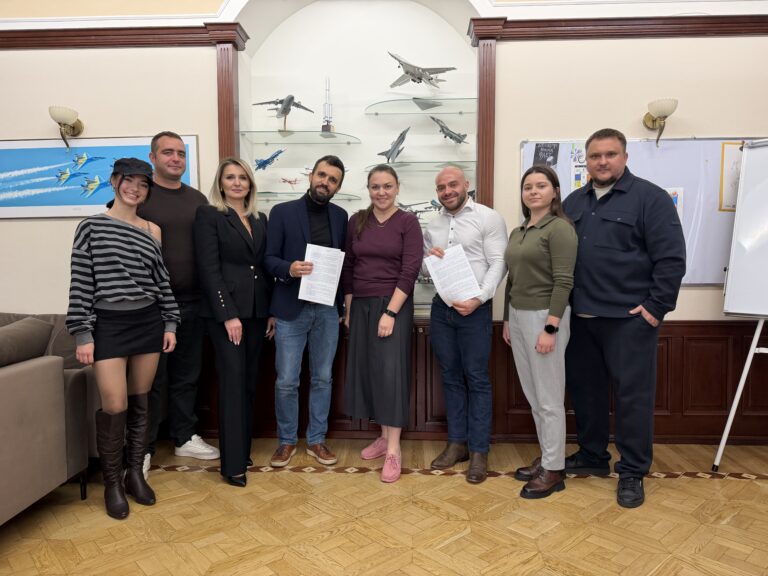
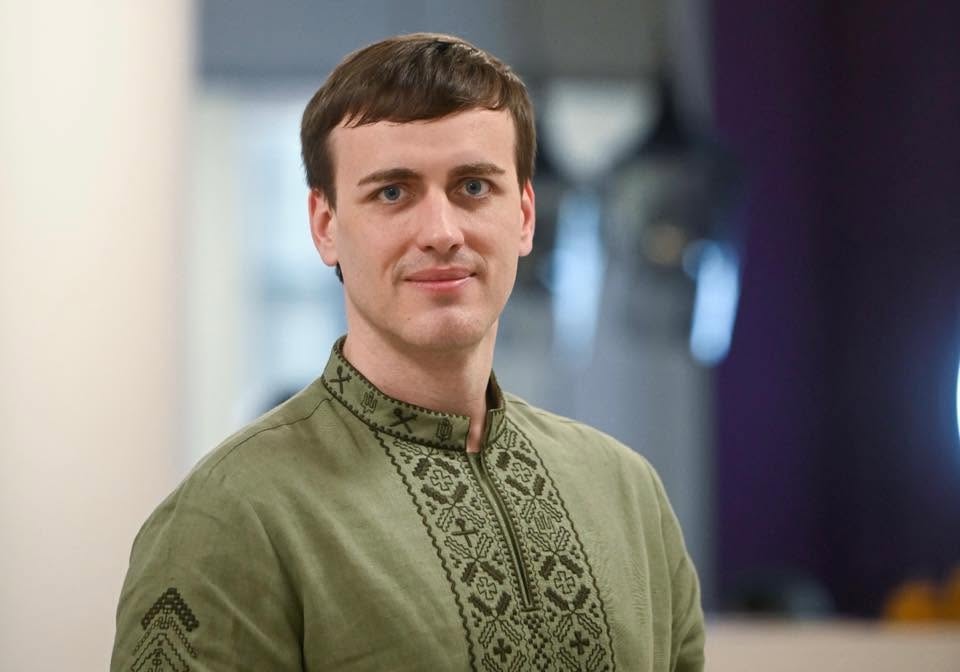
I am grateful to Vitalii Svichynskyi, head of the Next Ukraine Foundation, who invited me to join the jury of the UKRIC Inventors Cup — a competition for young Ukrainian inventors. For me, as a university lecturer and head of a charitable organization that develops educational programs in Kharkiv region, this became an opportunity to look at the problem of educational losses from a different angle.
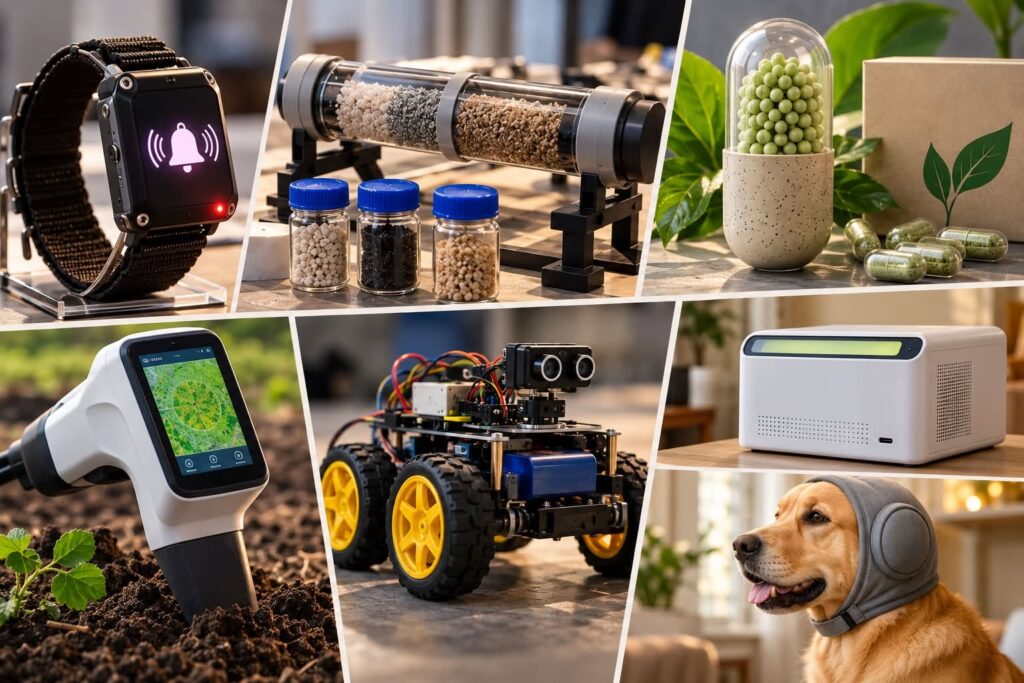
Teenagers propose solutions for energy saving, water purification, medicine, and human safety. They use programming, robotics, and artificial intelligence. But during expert evaluation, what interests me most is the distance between an interesting idea and a proven invention. Seeing a problem and proposing a device is not the same as researching analogues, formulating a hypothesis, conducting an experiment, and proving that the solution works.
A good presentation does not confirm the accuracy of measurements, and using a known technology does not automatically make a development new. For a judge, it is important not to devalue the idea, but also not to substitute scientific verification with encouragement. For a student — it means learning to work with criticism, admit mistakes, and test one’s own assumptions. This is an experience that is hard to gain simply by listening to a teacher’s explanations.
This is exactly where the question arises: where can a Ukrainian child go through this path if, for years, learning has taken place through a screen, with no laboratory, mentor, or team of peers nearby? We are used to measuring educational losses primarily by gaps in knowledge. However, the war also limits something else — the opportunities to act independently, experiment, work with people, and learn from one’s own mistakes.
From Idea to Proven Solution
The previous UKRIC season showed what organized support can give schoolchildren. In early 2026, 24 participants from Donetsk region completed a nine-week course in applied invention. Five of them traveled to the United States, where they presented their developments in Connecticut. According to the organizers, three Ukrainian schoolchildren received international Dassault Systèmes awards. Among the projects was, in particular, a bracelet that warns people with hearing impairments about air raid alerts.
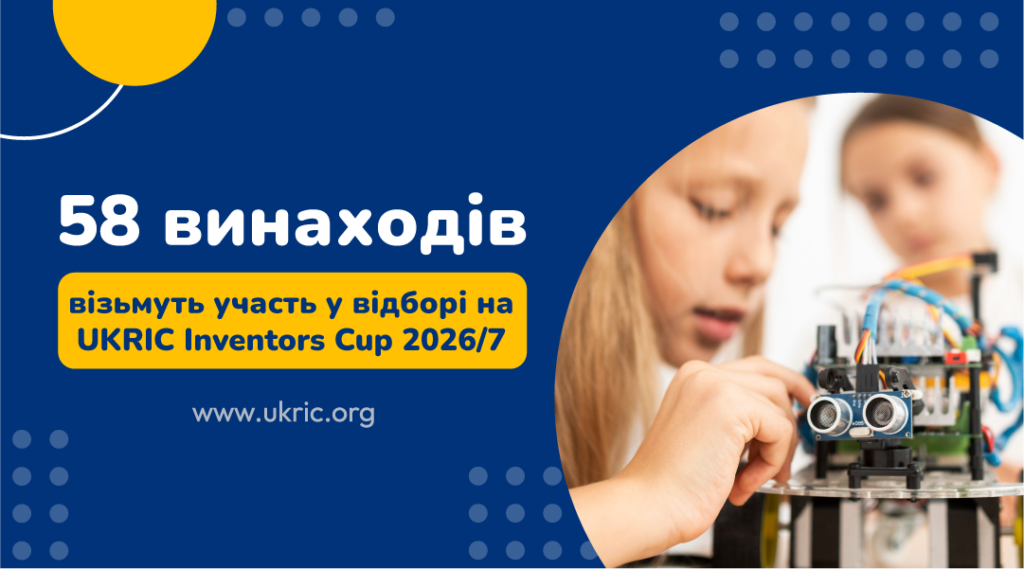
What matters here is not only the awards. The children got the opportunity to go through a consistent path from defining a problem to developing a solution and receiving a professional evaluation of the result. In the new UKRIC season, according to the organizers’ data as of October 19, 242 inventors have registered, 77 projects have been submitted, 58 of which have been admitted to the selection stage. But I am interested not only in how many children will win. What matters much more is what they will be able to do after the competition ends.
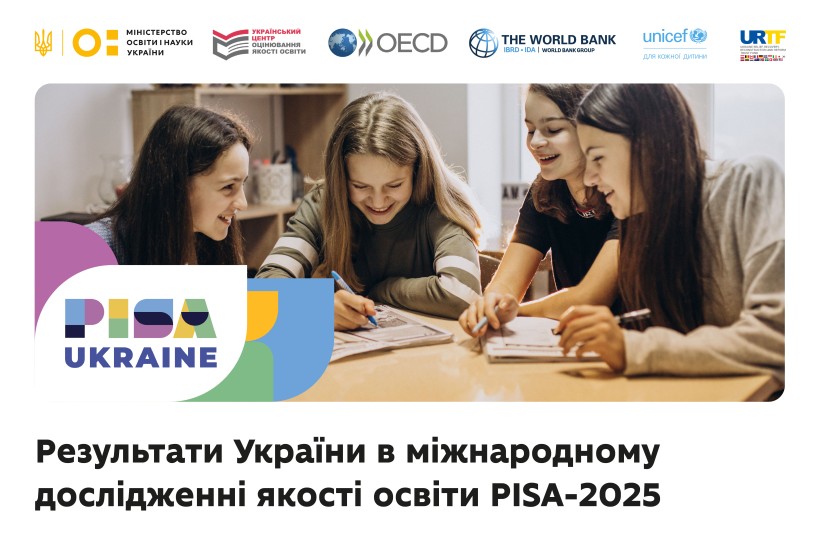
This question is directly related to the broader problem of Ukrainian education. According to the PISA-2025 results, published by the Ministry of Education and Science, 46% of the Ukrainian fifteen-year-old students covered by the study do not reach the basic level in mathematics, and 45% do not reach it in reading. Due to security restrictions, the study was not conducted in Kharkiv region, Donetsk region, and other most affected regions.
PISA does not measure the loss of experience in invention or teamwork. But these results show the scale of problems with basic competencies, which must be addressed alongside restoring opportunities for practical learning. The resilience of Ukrainian children should not become a justification for the fact that they have to overcome extraordinary obstacles just to gain ordinary opportunities for development.
In international practice, there are examples of long-term programs in which competitions are only part of the learning process. The American organization FIRST develops robotics through teamwork, engineering tasks, and mentorship. Schoolchildren do not just demonstrate finished constructions — they design, test, and improve them.
A ten-year study by Brandeis University, completed in 2024, found consistent positive differences in a number of indicators of interest in and engagement with STEM between FIRST participants and a comparison group. This does not mean that any robotics club will achieve the same result. However, the study gives grounds to take seriously the duration of training, practical tasks, and mentorship, rather than evaluating an educational program only by the results of a single competition.
What Our Practice in Kharkiv Region Shows
At the Ukrainian Charity Alliance, we work with this problem directly. In Kharkiv, we operate three “Zmistovno” educational centers, and in the communities of the region — four Unbreakable Spaces with educational components. Hundreds of children pass through our educational centers every year, gaining access to programming, STEM, English language, creative disciplines, and other areas of study.
But practical work makes me critical of the way we are used to evaluating the results of educational programs. We can count classes, attendance, and the number of participants. It is much harder to answer other questions. What exactly has the child learned? Is the child able to apply knowledge without a prompt? Can they formulate a problem, test their own assumption, explain an unsuccessful result, or negotiate with a team?
These questions are gradually changing our approach to organizing education. We are working on moving from a set of separate courses to long-term educational trajectories, in which practical tasks, mentorship, and the assessment of competency development will be interconnected. For now, this is a direction of work, not a proven result. It still needs to be tested and improved.
But it is already clear that not every educational solution requires new equipment. Sometimes much more important are a teacher who is in no hurry to give a ready-made answer, the opportunity to redo a project several times, or access to a specialist capable of asking the right questions.
A master class can interest a child. A short course can provide initial knowledge. A competition can create motivation and the opportunity to receive a professional evaluation. The problem arises when there is no continuation between these stages, and the child starts from scratch every time. This is especially noticeable for frontline communities, where access to in-person education has been limited for years.
Restoring education is not limited to repairing buildings or catching up on the curriculum. Children need to be given back an environment in which they can try, make mistakes, receive feedback, and gradually become more independent. This requires long-term work, not just a calendar of events.
For educational organizations, donors, and businesses, a more difficult but much more important question follows from this: not how many events we have held, but what their participants can do after the program ends, and whether this result is sustained over time.
Not all children will become inventors, engineers, or entrepreneurs. And this should not be a mandatory goal. But everyone may need the ability to act when there is no ready-made answer. It is precisely this experience that we risk underestimating when talking about educational losses during the war. And it is precisely this that we need to learn to give back to children along with knowledge.
———
Oleksii Kurtsev
CEO and co-founder of the Ukrainian Charity Alliance, Doctor of Law, Associate Professor