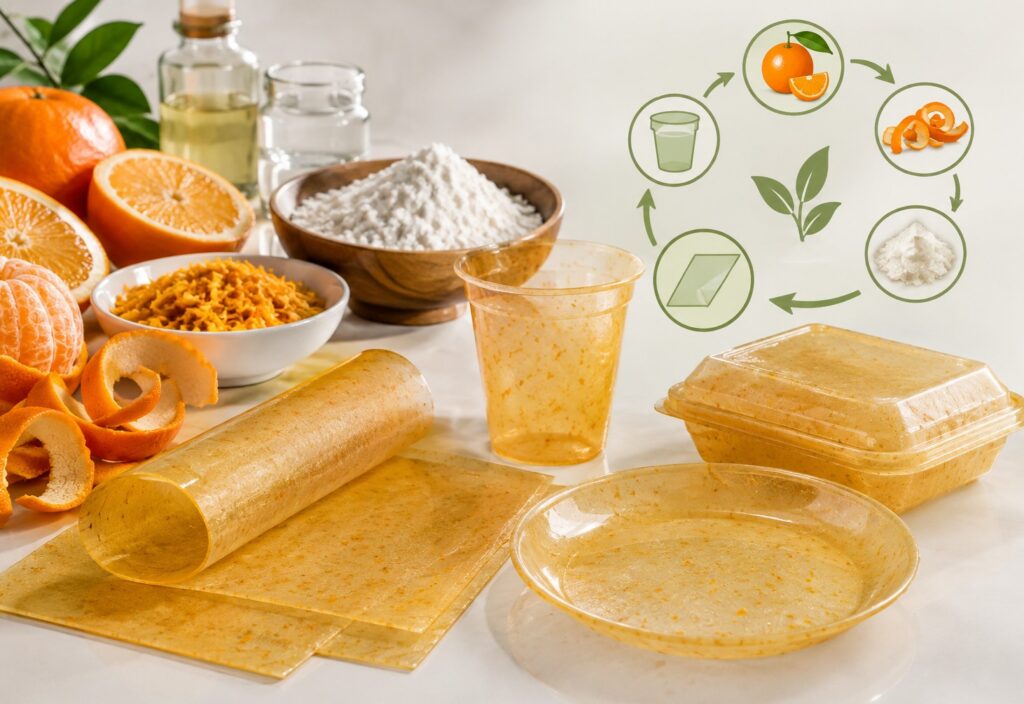

CitraBio.
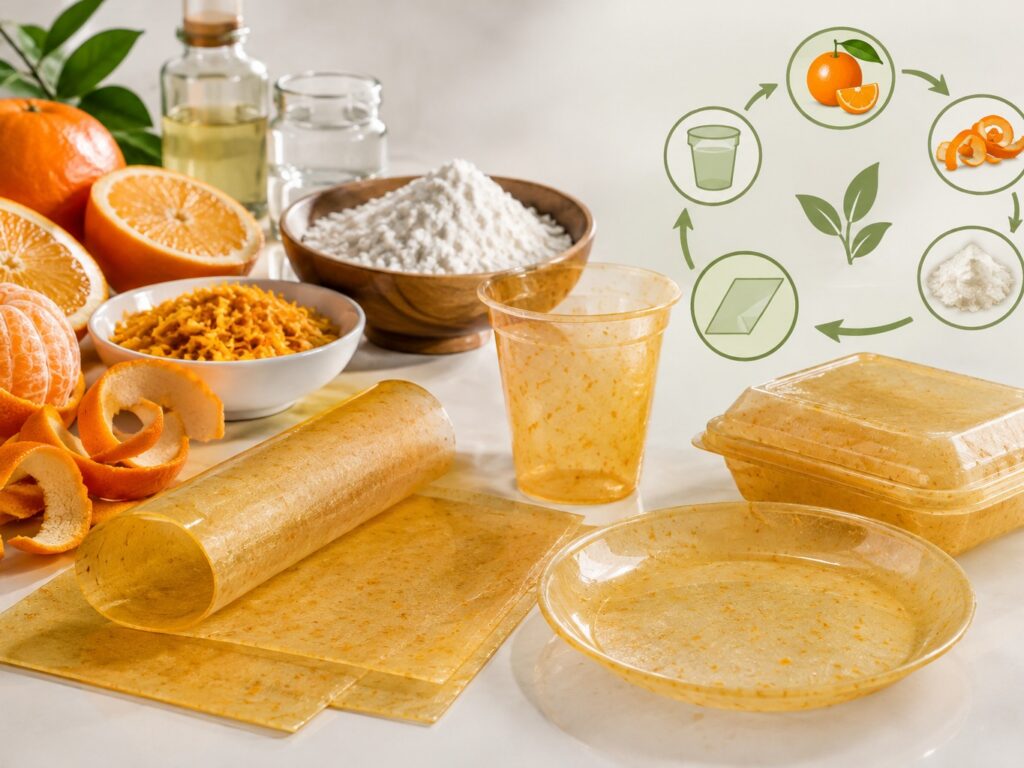
CitraBio is a biodegradable material made from starch and dried citrus peel. Its idea is to turn food waste into a useful material.
 Grade 9
 Kharkiv, Kharkivska Oblast
Why Різник Анна created the CitraBio.
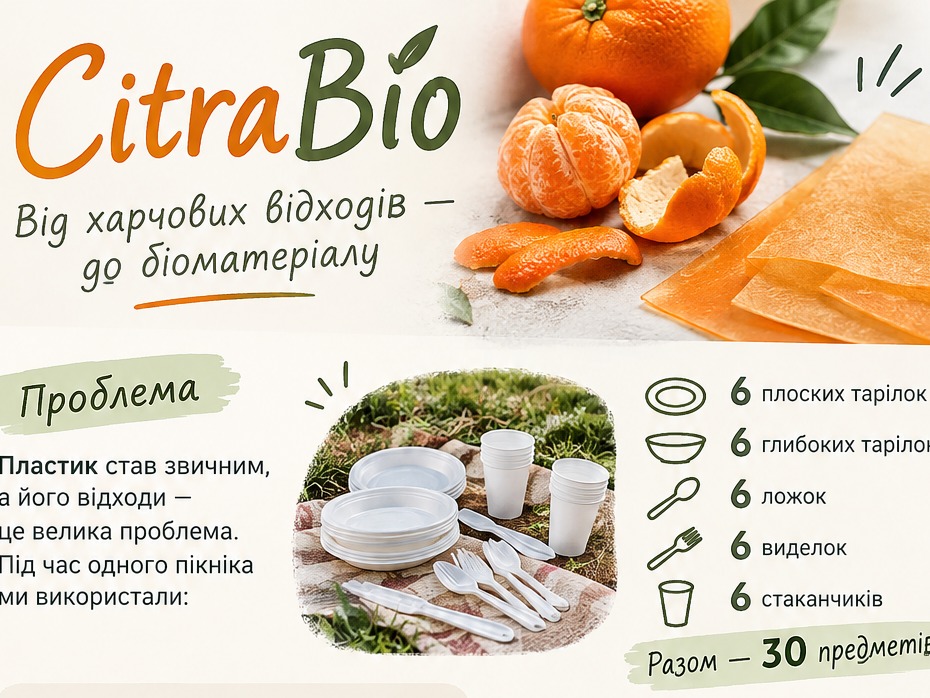
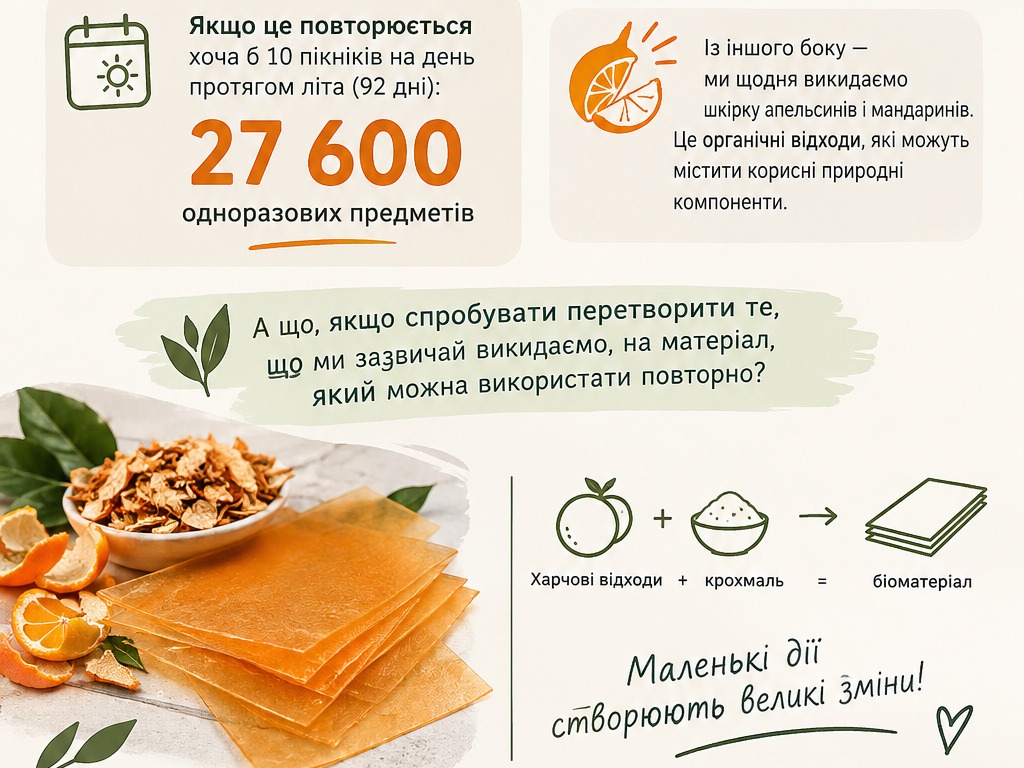
Problem Today, plastic has become so common in our lives that we often don't even think about how much of it we use every day. This is especially noticeable during outdoor recreation, holidays, picnics, or other events. I noticed this myself during one of the picnics with friends. There were 6 of us, and in just one sitting we used 6 flat plates, 6 deep plates, 6 spoons, 6 forks, and 6 cups. In total — 30 disposable plastic items. If we model a situation where at least 10 such picnics happen per day during the summer, that's already about 300 disposable items a day. Over the 92 days of summer — approximately 27,600 items. And this is just a conditional calculation for 10 picnics, not even accounting for bottles, bags, containers, and other plastic packaging. Most of this tableware is used only once — sometimes for just a few hours — and then becomes waste. In other words, the material, on whose production resources were spent, very quickly loses its value and ends up in the trash. There is another problem I've noticed in everyday life. In winter, we often buy oranges and tangerines, but after eating the fruit, a large amount of their peel also ends up in the trash. This creates an interesting situation: on one hand, we have a large amount of single-use plastic, and on the other — organic waste that may contain useful natural components. This is exactly where my question arose: what if we tried to turn what we usually throw away into a material that can be reused?
How the CitraBio works.
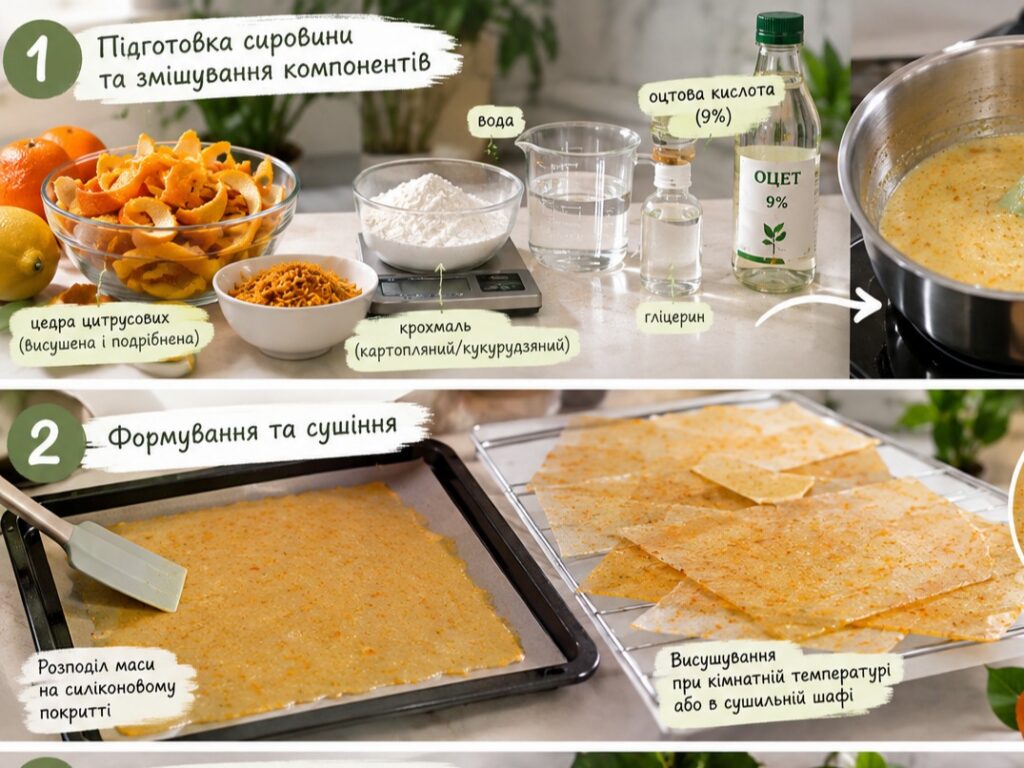
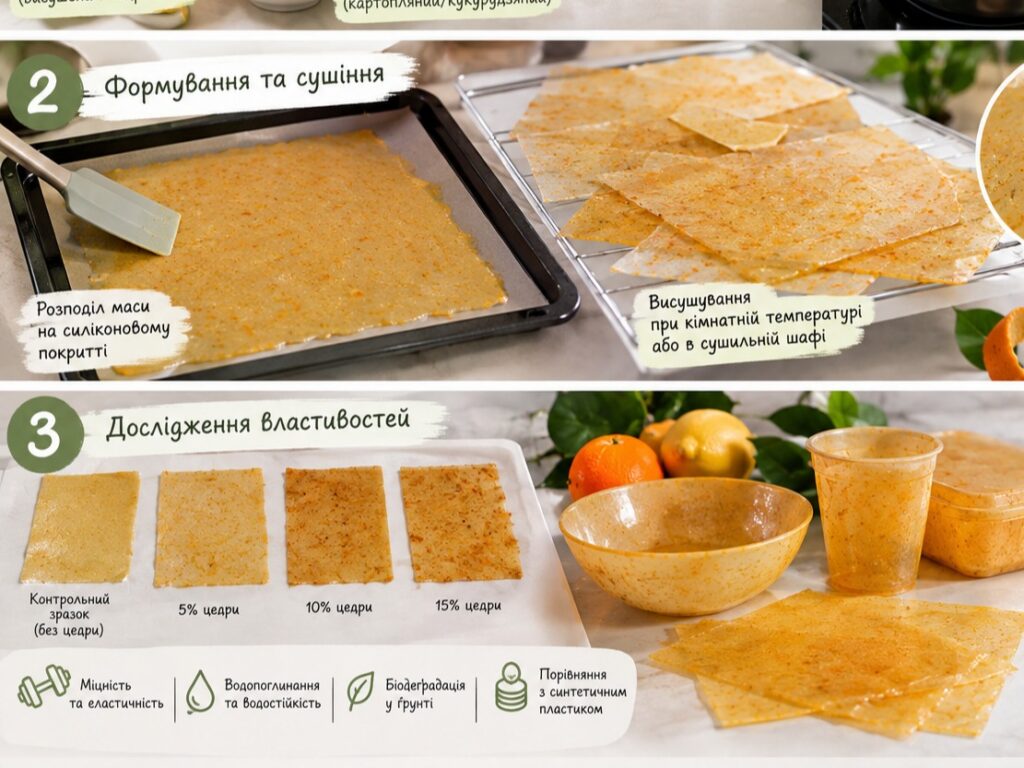
The idea is that ordinary food waste — potato/corn starch and citrus peel — is transformed into a new biodegradable material. In it, each component plays its own role:1. Starch — the base of the material. Starch is the main polymer component. When heated in water, its structure changes, and it forms a plastic mass from which a film or plate can be shaped.2. Glycerin — makes the material more flexible. Without a plasticizer, starch film can become hard and brittle after drying. Glycerin helps the material remain more elastic.3. Acetic acid — helps change the structure of the starch. Vinegar creates an acidic environment and promotes a partial change in the starch's structure during heating.4. Citrus peel — a natural filler. Dried and crushed peel is added to the starch base. It contains, among other things, pectin and cellulose components and acts as a natural filler that can change the rigidity, strength, and structure of the material.5. Water — the mixing medium. Water helps evenly mix the components and provides the necessary conditions for the transformation of starch during heating.What happens during production? Starch + water + glycerin + vinegar → heating → a homogeneous plastic mass → adding peel → shaping → drying → biomaterial. After drying, we get raw material that can be compared to ordinary plastic in strength, flexibility, and water resistance.
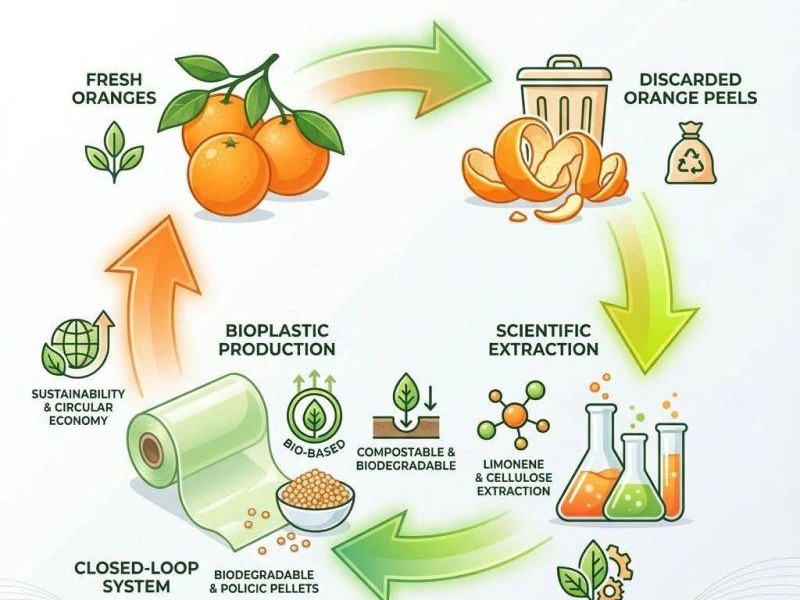
“What was waste yesterday can become the material of the future today”
— Різник АннаInside the build.

Are you a student inventor?
If you have an idea to solve a real problem in your community, we want to hear from you.

0 comments.
Sign in to join the conversation.